
The earlier you recognise a change in behaviour, the more options you have to influence what happens next.
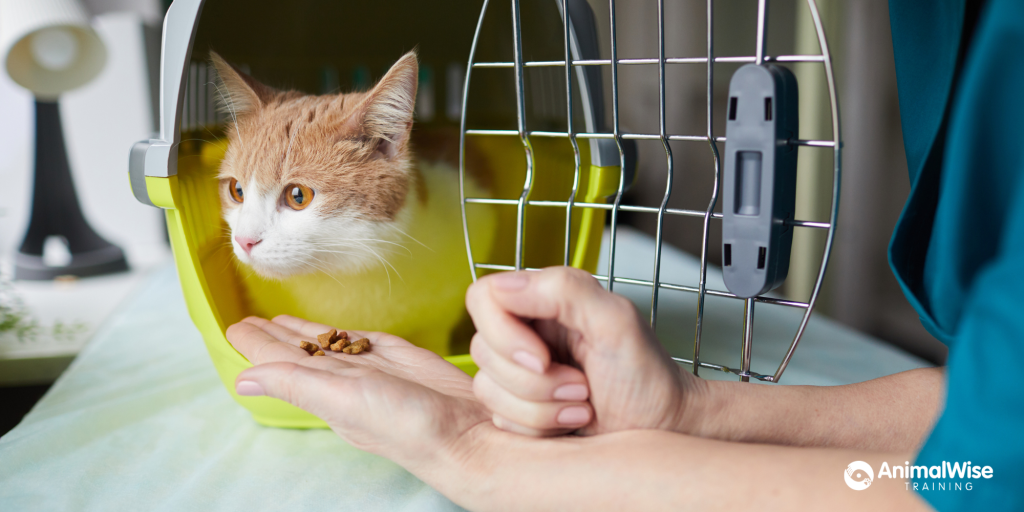
When you work with animals, recognising subtle changes in behaviour is a core professional safety skill.
Whether you work in a veterinary clinic, shelter, pound, rescue organisation, animal management role or another environment where you regularly interact with animals, behaviour is continually providing information about how an animal is responding and coping.
Early behavioural changes provide an opportunity to reassess risk while there may still be several safe and low-stress ways to proceed. The challenge is recognising those changes and responding proactively.
Although some incidents may appear to occur “without warning”, there have often been earlier changes in behaviour, posture or movement indicating increasing concern or a change in risk. These signals may be subtle, brief or difficult to see—and can easily be missed in a busy workplace.
Do not wait for the obvious warning signs
Growling, snapping, lunging, hissing or swiping are difficult to overlook. However, by the time you see these more overt behaviours, the animal is already experiencing intense fear or panic, and your options for safely changing the interaction are much more limited.
The term aggressive behaviour describes observable behaviour—not the animal’s personality or character. These behaviours often occur when an animal feels threatened, frightened, in pain, trapped or unable to cope. They may function to stop an interaction or increase distance.
Recognising the earlier changes gives us an opportunity to respond before the animal needs to communicate more strongly.
Earlier changes can be far less obvious.
You might notice increasing body or facial tension, changes in posture or movement, looking away, lip licking or yawning, changes in ear, eye or tail position, increased vigilance, attempts to move away, or an animal becoming very still.
Escalation does not always involve more movement or increasingly obvious behaviour. Some animals reduce their movement, become tense or freeze. Quietness and stillness must not automatically be interpreted as calmness, comfort or consent.
Behavioural changes in cats can be particularly subtle and may be more difficult for people to recognise. However, the underlying principle applies to both dogs and cats: look for changes across the whole animal rather than relying on one isolated behaviour.
A single lip lick, yawn, ear position or tail movement should not be interpreted in isolation.
Its significance depends on the animal, the context, what happened immediately beforehand and what other changes are occurring at the same time.
Learning the body language signs that commonly occur at different levels of escalation is an important foundation for risk assessment. With training and practice, you can learn to bring this information together—assessing signs across the animal’s whole body, their combination, intensity and frequency, the context in which they occur and how behaviour is changing over time.
Read the whole animal in context
Behaviour cannot be interpreted accurately without considering the environment and the circumstances surrounding the interaction.
Smells, sounds, surfaces, unfamiliar people, other animals, handling and restraint can all influence how an animal responds. Previous experiences and learned associations may also affect behaviour, as can pain, illness, fatigue, hunger and overstimulation.
You will not always know an animal’s history. However, you can observe what is happening in front of you.
Rather than asking only, “What is this animal doing?”, also consider:
- What is happening around the animal?
- What has just changed?
- What am I or another person doing?
- Is the animal’s behaviour changing?
- Does the original plan still make sense?
Risk is shaped not only by the animal’s behaviour, but also by our actions. How closely we approach, where we position ourselves, how quickly we move, whether we continue or increase our contact, and whether the animal has any opportunity to move away can all change what happens next.
This is important because behaviour is not simply a fixed characteristic of the animal. It reflects an interaction between the animal, the people involved, the environment and what is happening at that particular moment.
Risk can change throughout an interaction
An animal who shows behaviour consistent with being comfortable at the beginning of an interaction may not remain comfortable.
Stress and arousal can increase. The environment can change. Another person or animal may enter the area. Something we do may alter how the animal responds to the interaction.
An animal may also cope with one part of a procedure but become increasingly concerned as the interaction continues or the level of contact increases.
Assessing behaviour is therefore not something you do once before approaching or handling an animal and then forget about. It is an ongoing and dynamic risk assessment.
Continue monitoring the animal throughout the interaction. Be prepared to pause, reassess and change your approach when their behaviour changes—even if the original plan appeared appropriate when you began.
An animal approaching you does not necessarily mean they want to be touched. An animal remaining still does not necessarily mean they are comfortable. An animal who accepted contact a few moments ago may respond differently if that contact continues or increases.
Behaviour is fluid. Your assessment and handling plan need to remain fluid too.
Recognise, reassess and respond
When you recognise early behavioural changes, you may still have an opportunity to identify what is contributing to them and reduce the pressure on the animal.
Depending on the situation, you may be able to:
- identify and, where possible, reduce or remove triggers contributing to the animal’s concern;
- pause or stop the interaction;
- increase distance or provide more time;
- change your position, movement or handling approach;
- reduce or modify contact or restraint;
- use different equipment;
- seek assistance; or
- reconsider whether the task needs to proceed at that time.
The appropriate response will depend on the animal, the task, the environment and the level of risk. The aim is not simply to complete the original task, but to choose the safest and lowest-stress way forward.
If earlier changes are missed, or the interaction continues despite them, the animal can become less able to cope. The likelihood of more overt behaviour increases, while the range of safe, low-stress options narrows.
Recognising, reassessing and responding early helps protect both the animal and the people working with them.