
An animal welfare and body-language perspective
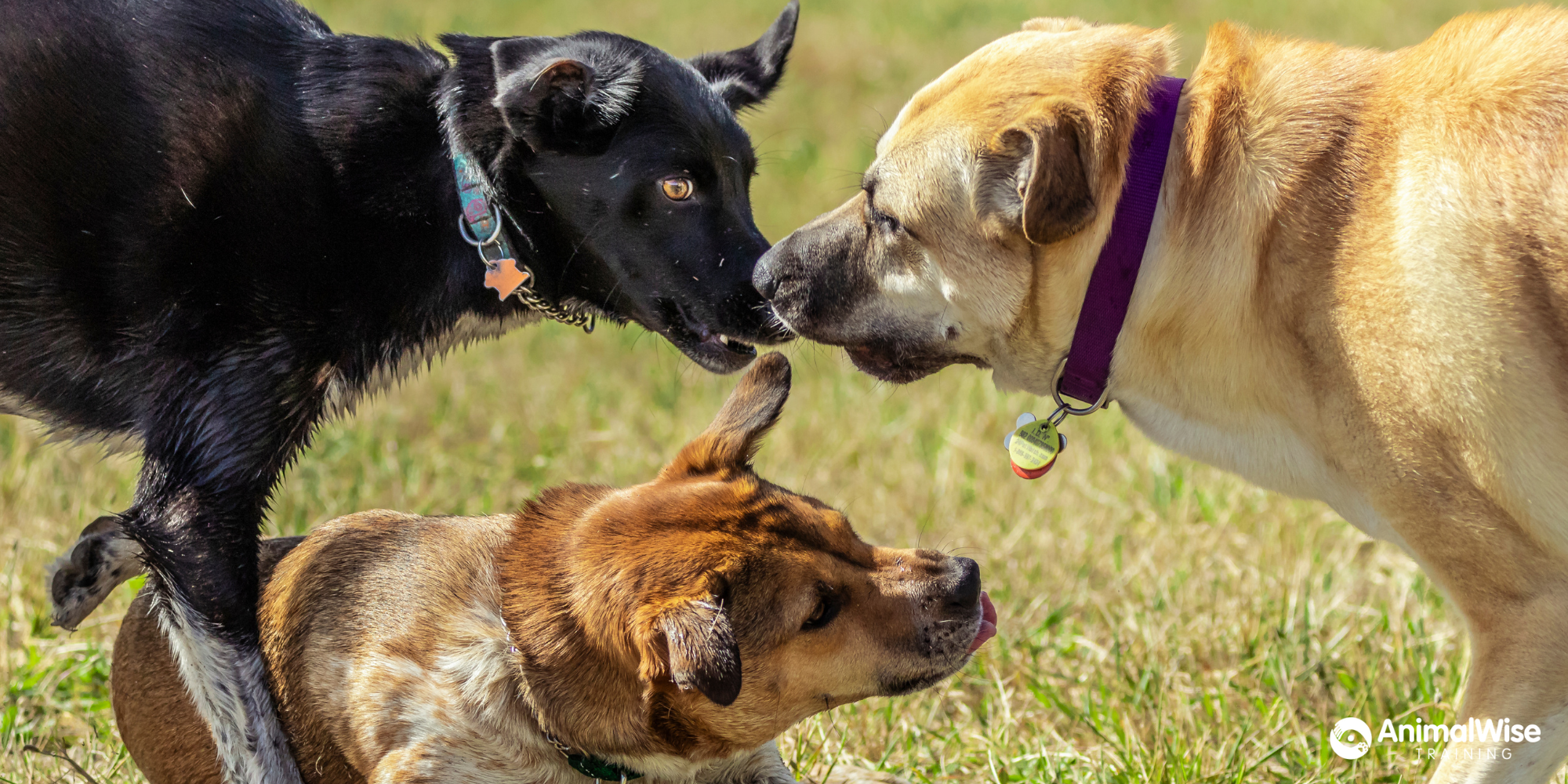
Dog parks are often promoted as a default solution for canine exercise and socialisation. The intention is positive – providing space, freedom, and opportunities for dogs to interact.
However, intention alone does not determine welfare outcomes.
From a behavioural and welfare perspective, it is important to step back and ask a more nuanced question: what do dogs actually experience in these environments, and how does that vary between individuals?
What dogs experience in fenced dog parks
From a dog’s perspective, fenced dog parks are typically characterised by:
- High numbers of unfamiliar dogs
- Close proximity and repeated unpredictable approaches
- Elevated noise and movement
- Limited opportunities to create distance or disengage
Dogs do not all experience these conditions in the same way. Age, emotional regulation, previous experiences, temperament, and what has already happened that day all influence how well a dog copes, or whether they cope at all.
The noise, intensity, physical closeness, and unpredictability of a crowded dog park can be overwhelming, even when nothing overtly “bad” happens. The experience itself may be stressful rather than enriching, particularly when dogs have limited ability to disengage.
As animal welfare and behaviour expert Dr Petra Edwards explains in the video below, for some dogs, entering a crowded dog park can feel like being the only sober person in a pub on Grand Final day.
Video excerpt featuring Dr Petra Edwards (City of Charles Sturt), used with permission.
Dogs are social – but may not want to be mates with everyone
Dogs are a social species, and social interaction is an important component of good welfare. However, this does not mean dogs benefit from interacting with large numbers of unfamiliar dogs, or from sustained social pressure in high-density environments.
For many dogs, social needs are best met through:
- Familiar dogs
- Brief, voluntary interactions
- Parallel activity rather than direct play
- The ability to disengage and re-engage on their own terms
In natural and familiar social groups, dogs rely on choice, distance, and predictability to regulate interactions. Fenced dog parks, particularly busy ones, often remove these options.
The welfare question is not “Is my dog friendly?”
It is “Is my dog comfortable right now, in this context?”
Reading social consent: interaction does not equal enjoyment
Social comfort between dogs is dynamic, not fixed. A dog that initiates or tolerates interaction initially may become uncomfortable as arousal rises or interactions continue.
Signs that dogs are choosing to engage may include:
- Loose, curved approaches
- Soft, fluid or bouncy and exaggerated movement (e.g. play bows)
- Reciprocal pauses
- Swapping roles (e.g. the chaser and the chased)
- Voluntary re-engagement after pauses
Signs that a dog may be struggling include:
- Turning away or attempting to create distance
- Stillness or slowed responses
- Weight shifting back, or lowered body, head or tail position
- Reduced responsiveness or playfulness
- Intense hyperactive interactions (e.g. constant movement, frantic jumping, unrelenting chasing; often mistaken for excitement)
- Displacement behaviours signalling discomfort (including yawning, sniffing the grass away from the other dogs, scratching, grooming themselves, or the “shake off”)
When dogs cannot disengage because of fencing, crowding, multiple or intense playmates, stress may escalate. Conflict may then appear to arise “out of the blue”, when in reality, earlier signals were missed or overlooked.
In high-density play environments, relying on the idea that dogs will “sort it out” can place them in emotionally vulnerable situations. Recognising when a dog is no longer enjoying an interaction and removing them early, is key advocacy protecting the dog’s welfare.
Signs of overwhelm suggesting a dog is really not coping may include behaviours such as growling or air snapping, which can also occur during play. Context matters. Healthy play is characterised by loose, flowing or bouncy body language, reciprocal role switching, natural pauses, and an absence of avoidance behaviours. In contrast, stiffening bodies, lowered body or tail positions, looking away, lip licking, displacement behaviours, or attempts to disengage indicate that a dog is likely struggling. Where signals are confusing or ambiguous, erring on the side of caution and interrupting the interaction, creating space, or leaving is often the most protective choice.
When play looks “fine”… until it isn’t
High arousal can mask discomfort. To human observers, fast movement, chasing, and noisy play may look energetic or joyful, even when one dog is coping rather than enjoying the interaction.
This is one reason incidents often feel sudden or unexpected. Escalation rarely comes from nowhere; it follows stacked stressors in an environment where dogs have limited control over what happens next.
Repeated exposure to these conditions even without overt fights, can have cumulative emotional effects, shaping how dogs feel about other dogs, shared spaces, and future interactions.
It’s not just about fencing – numbers and unpredictability matter
While fencing can amplify risk by restricting movement and escape, unfenced off-lead areas are not automatically low-risk environments.
As dog numbers increase, unpredictability increases regardless of whether a space is fenced. More dogs mean more unfamiliar interactions, greater variability in play styles, and fewer opportunities for dogs to manage their own distance comfortably.
From a welfare perspective, density matters as much as design. A fenced-in area in a quiet off-peak time with a couple of compatible dogs may be far less challenging than a crowded unfenced off-lead area with constant, unpredictable interactions.
Off-lead options that may better support welfare
For many dogs, alternative off-lead environments may be more welfare-supportive.
Large, open spaces that allow dogs and their handlers to keep moving rather than congregating can reduce social pressure and increase predictability. In these settings, dogs may:
- Have brief, voluntary interactions
- Disengage easily and return to their handler
- Continue moving without being followed or crowded
This pattern of short interactions followed by separation and onward movement, more closely reflects how many dogs naturally manage social contact, and may be optimal for a wide range of individuals.
On-lead options should also not be overlooked. “Sniffy walks” at the dog’s pace, can be a fabulous way for older or less social dogs to explore the world through their incredible sense of smell.
Be mindful that dogs on lead do not need to greet other dogs they encounter; in fact, face-to-face encounters on lead can often set up tense, highly aroused, or even reactive situations.
Why age matters and why it’s never the whole story
Dogs’ social needs and coping abilities change across life stages, but there is no universal “right” amount of dog-to-dog interaction.
Puppies are in a sensitive developmental period. They are still learning how to interpret social cues and regulate arousal, and they can be easily overwhelmed by busy, high-density environments, particularly if they cannot disengage. Exquisite care and monitoring of interactions is recommended as any scary experience or trauma that occurs in puppyhood can become a lifelong emotional challenge.
Adolescent dogs (roughly between 6 months and 2 years depending on the breed) often show increased social investigation and play attempts alongside impulsivity and heightened arousal. This age group is commonly over-represented in dog parks and may escalate quickly in intense social settings.
Adult dogs frequently show clearer social preferences. Many are less tolerant of chaotic play and may prefer calm activity, familiarity, or parallel movement rather than sustained interaction.
These patterns are general trends, not rules. Individual dogs vary widely in how much social interaction they enjoy, how they respond to social pressure, and how quickly they recover from stress.
Importantly, although there is a sociability spectrum, social tolerance is not static. Even dogs that appear comfortable initially may become overwhelmed as interactions continue. This is why ongoing monitoring of body language matters.
Leaving an interaction early is not overprotective, it is often the most protective welfare decision an owner can make. Emotional harm does not require a fight; it can occur through repeated exposure to interactions a dog cannot escape.
A welfare-first conclusion
Dog parks are often promoted as a default solution for canine exercise and socialisation, but for many dogs, they are not the most welfare-supportive environment.
High density, unpredictability, and restricted opportunities to disengage mean that even well-intentioned visits can place dogs under sustained social pressure. While some dogs, particularly certain adolescent individuals with a strong motivation for social play, may benefit under carefully managed conditions, this same developmental stage is also associated with increased impulsivity and arousal, allowing situations to escalate quickly.
From a welfare perspective, dog parks should be viewed as one option among many, not a requirement and certainly not a test of a dog’s friendliness or resilience.
A welfare-first approach recognises that the goal is not to maximise social exposure, but to protect emotional safety. For many dogs, this means choosing environments that allow movement, choice, and easy disengagement and being prepared to leave early when body language tells us it’s time.
For other dogs including those that are older, more reserved, or wary of interactions with unfamiliar dogs, choosing to avoid the dog park altogether may be the most protective welfare decision owners can make.