
How education can support safer dog interactions and stronger community outcomes
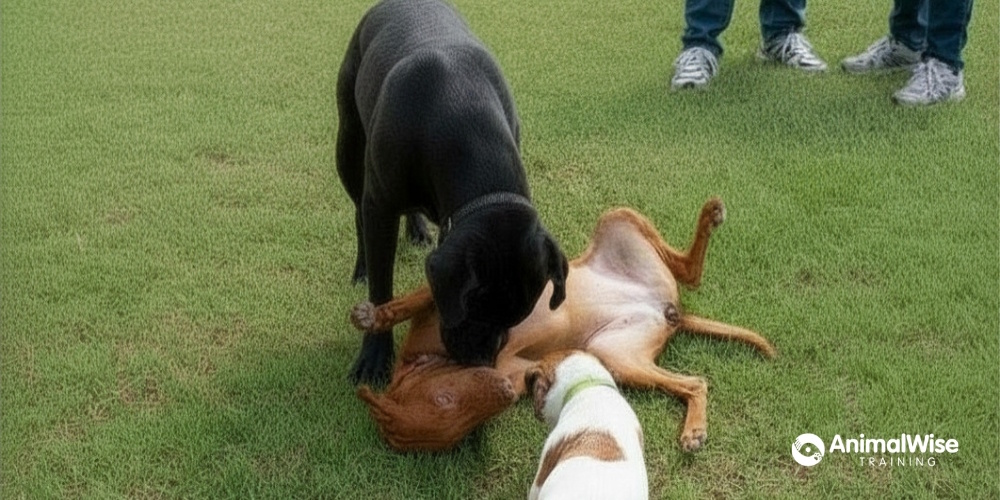
As explored in previous articles, understanding dog behaviour and the environments in which dogs interact are both critical components of managing risk in shared public spaces.
From a welfare perspective, dogs do not all experience off-leash environments in the same way. High-density, unpredictable interactions can place many dogs under social pressure, particularly when opportunities to disengage are limited. As discussed in our article on Are fenced dog parks actually good for dogs?, these environments can be overwhelming for many dogs, even when no overt conflict occurs.
From a planning perspective, fenced off-leash areas do not always function as intended, and may be used by only a small proportion of the dog-owning community, often in ways that can concentrate risk. As outlined in Fenced off-leash dog areas: usage patterns, risks and planning considerations for councils, understanding actual use patterns is critical for effective decision-making.
Taken together, these insights highlight an important point:
While environment and design matter, outcomes in shared dog spaces are ultimately shaped by human decision-making.
Where risk actually sits
Many dog-related incidents are not the result of inherently “aggressive” dogs, but rather a combination of:
- missed early warning signals
- rising arousal levels during interactions
- delayed or absent human intervention
- mismatches between dogs’ social preferences
In busy off-leash environments, these factors can combine quickly. Interactions that appear friendly at first may escalate as arousal increases, particularly when dogs are unable to disengage or when supervision is inconsistent.
As highlighted in our earlier article on dog welfare and body language, relying on the idea that dogs will “sort it out” can place them in emotionally vulnerable situations. Recognising when a dog is uncomfortable and responding early – before they are no longer coping – is key to preventing escalation.
This places a significant portion of risk not in the space itself, but in how interactions are interpreted and managed by people.
The limits of infrastructure, rules and signage
Councils often invest in infrastructure such as fenced off-leash areas, along with signage and local laws intended to guide safe use. While these are important components of animal management, they have limitations. Fencing can contain dogs, but it does not regulate behaviour, signage can provide rules but does not teach interpretation, and enforcement can address incidents but does not offer a proactive, preventative solution.
Without a baseline understanding of dog behaviour, even well-designed spaces may produce unintended outcomes. This is where community education becomes a critical – and often underutilised – component of risk management.
Understanding the canine sociability spectrum
A key concept underpinning many challenges in shared dog spaces is that dogs vary widely in their sociability.
Rather than being simply “friendly” or “not friendly”, dogs exist on a spectrum of social tolerance and preference.
At one end are highly social dogs that enjoy frequent interaction with a wide range of other dogs. At the other are dogs that prefer minimal or no interaction with unfamiliar dogs. Many dogs fall somewhere in between – socially tolerant or selective – with preferences that may change depending on context, environment, or how they are feeling on the day.
Importantly:
- even highly social dogs can become overwhelmed
- socially tolerant dogs may cope, but not enjoy interactions
- socially selective or solitary dogs often find busy environments highly stressful
Many incidents in off-leash environments arise not from deliberate aggression, but from mismatched social expectations between dogs.
Helping owners understand where their dog sits on this spectrum – and how that may change over time or within a single interaction – represents a key opportunity for community education.
Concepts such as the canine sociability spectrum can be translated into practical education tools, supporting owners to better understand their dog’s social preferences and make more appropriate decisions about where and how they exercise them.
What owners need to understand
Effective community education focuses on building practical skills that support better decision-making in real time.
Key areas of understanding include:
- understanding where a dog sits on the canine sociability spectrum, and what environments and interactions are appropriate
- recognising canine body language, including early signs of stress or discomfort
- distinguishing between healthy play and escalating arousal
- supervising interactions and knowing when to intervene, create space, or leave an environment
- developing appropriate levels of control, including reliable recall and safe on-lead behaviour
- supporting a dog’s ability to settle in different environments
- considering alternative forms of exercise where off-leash social environments may not be appropriate
These skills directly address the factors that often contribute to incidents, particularly missed signals and delayed responses.
Rethinking signage and information sharing
Traditional signage in off-leash areas often focuses on rules and compliance. There is an opportunity for councils to expand this approach to include behavioural education and decision-making support.
This may include:
- visual guides to canine body language
- examples of appropriate and inappropriate play
- prompts to encourage active supervision
- guidance on when to leave an interaction
- tools to help owners match their dog to suitable environments
Concepts such as the canine sociability spectrum can be particularly valuable when incorporated into signage and communication materials, helping owners interpret their dog’s behaviour in real time and make more informed decisions in shared spaces.
The City of Charles Sturt’s animal management resources provide strong examples of how clear, accessible communication can support improved outcomes in shared environments.
Education as a prevention strategy
Education offers councils a proactive way to influence behaviour before incidents occur. Compared to enforcement alone, it can support earlier intervention during interactions, improve owner confidence and decision-making, and reduce reliance on reactive responses. It also contributes to more consistent community expectations and supports both human safety and animal welfare outcomes.
Importantly, education is scalable. It can be delivered through a combination of:
- online resources and learning modules
- community workshops and seminars
- onboarding materials for new dog owners
- in-park information sessions with qualified trainers using positive, rewards-based methods
- partnerships with local professionals
Councils may wish to consider partnering with qualified professionals using force-free, evidence-based approaches to support the development and delivery of education initiatives. Given the variability in terminology across the dog training industry, careful consideration of a provider’s approach, including the consistent use of positive, rewards-based methods, is important.
A broader approach to safer shared spaces
Preventing dog-related incidents is not simply about where dogs are exercised, but how interactions are understood, interpreted and managed.
Infrastructure, planning, and design all play important roles. However, without a corresponding investment in community education, these measures alone may not achieve the intended outcomes.
By integrating thoughtful open-space planning, realistic expectations for how spaces are used and targeted community education, councils can better support safe, inclusive and welfare-focused shared environments.
Supporting councils through education
AnimalWise Training supports councils and animal management teams through practical education in animal behaviour, body language, and low-stress handling.
This includes structured training programs and community education resources designed to improve understanding, support safer interactions, and strengthen outcomes across both animal management operations and the wider community.